
Minister of Education: Farhangian University Should Become a Global Reference for Teacher Education in the Islamic World / Review of Educational Content and Curricula at Farhangian University

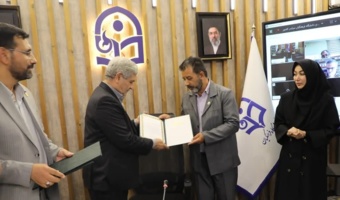
At the ceremony honoring Rajabali Barzoui and introducing Mehrzad Hamidi as President of Farhangian University, the Minister of Education emphasized the university’s strategic position within the country’s education system, identified its current curriculum as its most significant challenge, and called for fundamental reforms in content, structure, assessment systems and teacher education.
According to the Public Relations Office of Farhangian University, quoting the Information and Public Relations Center of the Ministry of Education, Alireza Kazemi, Minister of Education, spoke on Sunday afternoon, June 7, at the ceremony marking the transition in the university’s presidency. While expressing appreciation for the services of Rajabali Barzoui and congratulating Mehrzad Hamidi on assuming the presidency of the university, he said: “Today is a memorable day for Farhangian University, not merely because of this ceremony, but because a new individual with fresh energy, motivation and capabilities is joining the university.”
He stated that everyone who has served at Farhangian University represents an asset and a source of support for the institution and will continue to contribute to it wherever they may be.
Kazemi praised the performance of the former president of Farhangian University, saying: “Anyone who objectively examines the university’s indicators will recognize its significant growth. Mr. Barzoui made every possible effort during his tenure, and the university’s achievements demonstrate this reality.”
Regarding the appointment of Mehrzad Hamidi, he said that following the finalization of Mr. Barzoui’s resignation, there had been serious concerns about the future of Farhangian University. “Mr. Hamidi was neither a recommended nor an imposed choice. We invited him to accept this responsibility and contribute to the education and teacher education system, and he selflessly accepted the mission,” he stated.
Emphasizing the importance of Farhangian University, Kazemi said: “The Supreme Leader has repeatedly emphasized that Farhangian University is among the country’s highest-priority institutions. If Farhangian University becomes weak, the education system will become weak, and if this university is harmed, the country’s future will be harmed.”
Referring to the Supreme Leader’s description of teacher education as the “mother nursery,” he called for the development and promotion of the Supreme Leader’s intellectual framework concerning Farhangian University, adding that this perspective should be highlighted in Parliament, the government, ministries and all national policy-making bodies.
The Minister of Education stressed that Farhangian University must not become a venue for political or factional activities. “This university is not a place for political, partisan, group or factional competition. It is an institution for educating teachers, and it must prepare teachers who are committed to the principles of the Islamic Republic, revolutionary values, national identity and religious identity,” he said.
Kazemi identified the university’s faculty members as the most important asset available to its new president, emphasizing that particular attention should be paid to their livelihood, welfare, professional standing and academic development.
The Minister outlined four major areas of responsibility for the university’s new management. The first, he said, is development-oriented policymaking and making maximum use of legal capacities within the Supreme Council of the Cultural Revolution, Parliament and the government. In this regard, strong think tanks should be established to identify needs and develop solutions.
He identified the second priority as identifying and resolving the university’s challenges, emphasizing that various issues should not impede its development and transformation. All challenges must be identified, prioritized and addressed through operational plans.
Kazemi described the third priority as transforming the university’s performance indicators. Indicators such as the faculty-to-student ratio, dormitory capacity per student, budget, and academic and research achievements must be carefully monitored, with appropriate plans developed for their improvement.
The Minister described the fourth and most fundamental priority as transforming the strategic direction and foundations of Farhangian University. “The most important challenge facing Farhangian University is its curriculum. We need an integrated educational and developmental program whose outcome is a teacher aligned with the ideals of the Islamic Revolution,” he said.
He continued: “The current educational programs are excessively memory-based and classroom-centered, passive and lacking in practical skills, while there is insufficient integration among the educational, cultural, developmental and sports components.”
The Minister of Education called for a comprehensive review of the educational content and course syllabi at Farhangian University, stressing the need to determine whether the existing content corresponds to current societal needs, cultural developments and the characteristics of the new generation of students.
He also emphasized the need to transform the teacher-student assessment system, stating that clear indicators should be established for evaluating teachers aligned with the ideals of the Islamic Revolution, so that the extent to which university graduates have achieved the expected educational and developmental objectives can be clearly determined.
Kazemi further stressed the need for greater investment in faculty development, saying that, just as continuous professional education is provided in medicine, engineering and other professions, effective and continuous academic and professional development programs should also be designed for faculty members of Farhangian University.
He identified transformation in the university’s structure, organization, human resources, content and processes as other key requirements facing the new management, stating: “Farhangian University must reach a point where it can meet all of the education system’s human-resource needs and even become a leading academic reference for teacher education in the Islamic world.”
Referring to the importance of collective wisdom and organizational cohesion at Farhangian University, Kazemi said that the university’s success depends on solidarity, coordination and participation among all managers, faculty members and staff, and that this cohesion must extend from the university’s leadership to its academic departments.
The Minister of Education expressed hope that, through reliance on God, sincere service and commitment to the ideals of the Islamic Revolution, Farhangian University would fulfill its historic and decisive role in preparing the country’s future generation in the best possible manner.

Your Comment :