
Head of Farhangian University’s Center for Monitoring, Evaluation and Quality Assurance: High-Quality Teacher Competency Assessment Is Essential to Securing the Quality of Future Human Capital

The head of Farhangian University’s Center for Monitoring, Evaluation and Quality Assurance has emphasized the decisive role of teacher competency assessment in selecting candidates for entry into the teaching profession. He stated that standardizing this process involves much more than using uniform forms and guidelines; it also requires a shared understanding of competency, assessment criteria, methods for observing and recording evidence, and the professional judgment exercised by assessors.
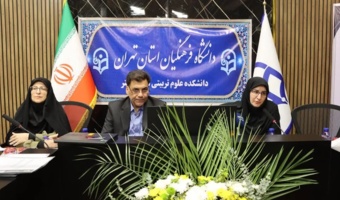
According to the Public Relations Office of Farhangian University’s Central Organization, Sajed Yaghoubnejad, head of the university’s Center for Monitoring, Evaluation and Quality Assurance, made these remarks at the National Meeting on Coordination and Clarification of the Teacher Competency Assessment Process for Candidates in the 2026 Recruitment Cycle (1405 in the Iranian calendar). He described the assessment process as one of the most important stages in identifying and selecting candidates for the teaching profession, emphasizing that the quality of its implementation can play a decisive role in safeguarding the quality of the future human capital of the country’s education system.
Stressing the need for the assessment process to be implemented accurately, consistently and uniformly nationwide, Yaghoubnejad explained that standardization is not simply a matter of harmonizing forms and guidelines. Rather, it requires a common understanding of competency, assessment criteria, methods of observing and documenting evidence, and the principles governing assessors’ professional judgments.
Highlighting the role of lead assessors in implementing the process, he noted that they must not only have a thorough command of the assessment framework and its tools, but also be able to communicate the process standards accurately and clearly to other assessors and provincial personnel. For this reason, he said, training lead assessors is one of the fundamental pillars of the success of this national initiative.
Yaghoubnejad also underscored the importance of safeguarding fairness, accuracy and validity throughout the assessment process. He stated that, when selecting the country’s future teachers, it is essential to ensure that all candidates—regardless of their province or assessment location—undergo a standardized process based on uniform criteria, and that assessors’ decisions are grounded in valid, observable and defensible evidence.
“The country’s future teachers must be selected through a process that meets the highest standards of accuracy, fairness and validity,” he stressed. “A decision made today about a candidate’s competency is, in effect, part of the decision-making that will shape the quality of the education system in the years to come.”
Referring to the main topics addressed at the meeting, Yaghoubnejad said participants reviewed and received training on the philosophy and framework of teacher competency assessment; the roles and responsibilities of the various personnel involved; implementation requirements; the use of assessment tools; the recording and documentation of evidence; the principles of professional judgment; common assessor errors; and strategies for standardizing the process.
He described the national meeting as an important step toward establishing consistent procedures across provinces and ensuring that the 2026 teacher competency assessment process is conducted accurately, fairly and in accordance with national standards.
Yaghoubnejad concluded that the process is designed to select the most qualified individuals for one of society’s most sensitive and influential professions: teaching. He emphasized that it must therefore be carried out with the highest levels of accuracy and professional responsibility.


Your Comment :