
Acting President of Farhangian University Emphasizes the Need to Establish the University as a Leading Scientific Authority in the Country’s Education System

The acting president of Farhangian University has stressed the need for the university to advance toward becoming a leading scientific authority in education and teacher training. He described “pushing the boundaries of knowledge” and “democratizing science” as the two pillars of scientific leadership, stating that Farhangian University can become a leading scientific reference for the country’s education system by drawing on its academic staff’s expertise, its extensive community of stakeholders, and its specialized mission of teacher education.
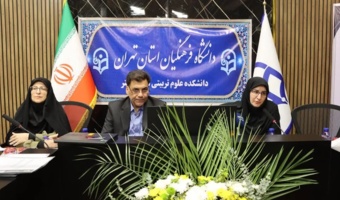
According to the Public Relations Office of Farhangian University’s Central Organization, Mehrzad Hamidi, the university’s acting president, made these remarks at the eighth professional development workshop for the editors and managing editors of the university’s scholarly journals. The event was held at Shahid Bahonar Camp in Tehran.
Emphasizing the importance of research and the production of useful knowledge, Hamidi noted that the concept of “beneficial knowledge” is highlighted in various supplications and prayers. He said such knowledge can provide direction and serve as a roadmap for the university’s academic, educational, and research activities.
Hamidi explained that scientific authority, leadership, and excellence generally rest on two pillars. The first is pushing the boundaries of knowledge and achieving excellence in a particular discipline or specialized field at the university, faculty, or departmental level. The second is becoming a trusted source of expertise for society and advancing the democratization of science.
He stated that Farhangian University has considerable potential to establish scientific leadership in education. Its young and motivated academic staff, together with the substantial academic portfolios submitted to its promotion and tenure committee, demonstrate the university’s strong academic capacity. This potential is particularly notable given that the university’s programs currently focus mainly on undergraduate and master’s degrees, without doctoral programs.
Hamidi identified becoming a leading scientific authority in education as one of Farhangian University’s strategic priorities. He emphasized that the university’s academic capacity must be mobilized so that it is recognized not only within academic circles but also by the wider public and throughout the country’s education system.
He highlighted the particular importance of democratizing science for Farhangian University, noting that its extensive target community offers an exceptional opportunity to disseminate and put the university’s research findings into practice.
Hamidi called for moving beyond the publication of research solely in academic articles and specialized journals. He stressed the need to communicate scientific findings in language accessible to the public. Alongside scholarly journals, he said, the university should develop publications that explain how research findings can be applied in ways that are meaningful and understandable to society.
He also emphasized the need for academic staff to engage actively in public life. Conditions should be created for Farhangian University faculty members to contribute effectively to educational programs on the national broadcasting network, academic forums, family-oriented programs, and discussions on child development. Schools and school administrators should also draw on university faculty expertise to provide training for teachers and parents on topics such as child-rearing and fostering a love of reading.
Addressing the quality of the university’s scholarly journals, Hamidi expressed appreciation to the Ministry of Science, Research and Technology and its Research Deputy for supporting Farhangian University. He noted that the university currently publishes approximately eight scholarly journals. The main purpose of these professional development workshops, he explained, is to strengthen journal management, raise awareness, and facilitate the exchange of experience in order to improve both the quantity and quality of the publications.
Hamidi also highlighted Farhangian University’s distinctive role arising from its specialized mission and close ties with the education system. However, he cautioned that this distinctiveness should not isolate the university from other higher education institutions. Instead, cooperation with the Ministry of Science and leading universities across the country should be strengthened.
He identified the expansion of academic collaboration with other universities as another pathway to scientific leadership. Joint publications, co-authored books, and shared academic events—particularly in the field of educational sciences—should be further developed.
Referring to the Ministry of Science’s regulations on joint academic activities, Hamidi noted that collaboration between Farhangian University faculty members and academics from other universities carries significant academic credit under the relevant regulations. He called for greater awareness of these provisions and their effective implementation to encourage wider participation by the university’s academic staff.
Hamidi described support for research and the promotion of a strong research culture as enduring university policies. He also stressed the importance of writing and publishing books to disseminate science and transfer knowledge. Scientific books and other academic outputs, he said, can contribute to the university’s scientific standing when they are designed to address the needs of society and the national education system.
Referring to the new Deputy for Education’s reform-oriented approach to academic programs, Hamidi highlighted several priorities: reviewing the overall architecture of the curriculum, updating course content, empowering academic staff, and transforming the student-teaching practicum. Under these conditions, he emphasized, teaching and research must advance together as the university’s two academic pillars.
He also called for university decisions to become more data-driven, stressing that costly projects and programs should be assessed before implementation through surveys, needs assessments, problem analysis, and public-opinion research.
Hamidi further emphasized the need to improve the standing and rankings of the university’s scholarly journals in evaluation systems and reputable international citation databases.
Reiterating the guiding role of beneficial knowledge, he said Farhangian University must pursue both dimensions of scientific leadership simultaneously: achieving excellence at the frontiers of knowledge and ensuring that the knowledge it produces reaches society and the education system in practical, applicable forms.
He also stressed the importance of a systemic approach to coordination between the university’s educational and research divisions. These divisions, he said, should not operate in isolation but should work within a unified framework that serves the university’s overall interests and strategic objectives.
In conclusion, Hamidi noted that Farhangian University is supported by both the Ministry of Science, Research and Technology and the Ministry of Education, emphasizing that the university is not alone in its pursuit of scientific development.

Your Comment :