
Acting President of Farhangian University: Knowledge, Understanding, and Skills Must Lead to Problem-Solving

The Acting President of Farhangian University has described the progression from “knowledge and understanding to skills and problem-solving” as a fundamental message from the Supreme Leader of the Islamic Revolution to the education community. He also outlined four key transformative shifts and announced plans to establish comprehensive provincial campuses of Farhangian University across the country.
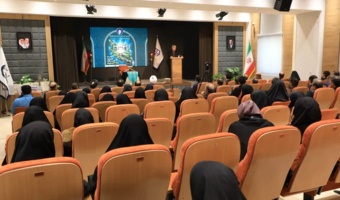
According to the Public Relations Office of Farhangian University’s Central Organization, Mehrzad Hamidi, Acting President of Farhangian University, delivered the remarks at the academic year opening ceremony held on September 27, 2026, at Nasibeh Faculty of Farhangian University. Paying tribute to the founder of the Islamic Revolution and the late Supreme Leader, he emphasized the importance of learning from the legacy of the two leaders of the Revolution, particularly their ability to “turn ideas into reality” and translate goals into tangible achievements through practical action.
Congratulating faculty members and student-teachers on the beginning of the academic year, Hamidi explained the Supreme Leader’s message, noting that the new academic year had been described as a new stage in acquiring “knowledge, understanding, and skills.” Knowledge, he explained, involves awareness and the acquisition of information, grounded in reason. Understanding goes beyond this to encompass deeper recognition, heartfelt conviction, and certainty about what has been learned. When such conviction becomes internalized, it finds expression in practice and skill.
He stressed that the ultimate goal of this progression must be problem-solving. Knowledge that does not develop into skills, and skills that do not lead to solutions, cannot achieve meaningful impact. Beneficial knowledge, therefore, means moving beyond the acquisition of information toward conviction, practical competence, and the ability to address society’s challenges.
Referring to a saying attributed to Imam Ali (peace be upon him) concerning the foundations of faith—inner recognition, verbal affirmation, and action through one’s limbs—Hamidi called on faculty members and student-teachers to pursue academic mastery, develop deep professional conviction, and translate both into effective action. He added that the Supreme Leader’s description of education and culture as a “meta-strategy,” and of Farhangian University as the “center of gravity of the education system,” underscored the University’s significant responsibility for the country’s civilizational advancement and development.
Addressing the country’s sensitive and historic circumstances, Hamidi described national unity, cohesion, and solidarity as vital necessities rather than mere slogans. He said that adversaries were targeting the nation’s dignity, honor, independence, and civilizational identity. At this critical historical juncture, he added, national solidarity and the institutionalization of a culture of self-sacrifice, self-reliance, and piety, alongside the pursuit of knowledge, would serve as a formidable shield against foreign ambitions.
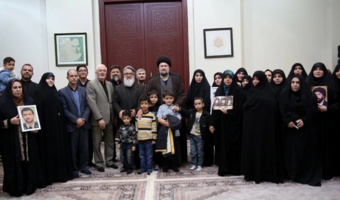
Hamidi also paid tribute to the families of the martyrs, particularly the families of those killed in the Shajareh Tayyebeh School in Minab who attended the ceremony. He described their presence as a source of blessing and dignity for the academic year opening event.
Four Strategic Shifts in the University’s Transformation Agenda
Outlining Farhangian University’s new transformation policies, Hamidi identified four fundamental shifts:
- From one-dimensional education and development to holistic, multidimensional development.
- From centrally designed national cultural, educational, and sports programs to practical, inclusive initiatives implemented within faculties and student dormitories.
- From supply-driven approaches to demand-driven programs informed by student-teacher surveys and satisfaction assessments.
- From a centralized, headquarters-oriented structure to a system of regional hub universities with greater responsibility and autonomy, based on a national division of responsibilities and the delegation of authority to provincial units and faculty members.
Hamidi also outlined transformation initiatives across the University’s various departments and operational areas. In human resources, he said, the University was seriously pursuing meritocracy, the recruitment and empowerment of younger talent, succession planning, and leadership development.
In education, the University plans to establish specialist teams to review the overall architecture of its curricula, update course outlines and content across all disciplines in line with current needs, and structurally reform the practicum process for student-teachers.
In the cultural, educational, and student affairs domains, priorities include strengthening student organizations, enriching leisure activities—with particular attention to nighttime life in student dormitories—expanding cultural centers, and holding regular competitions and events within faculties and dormitories.
Referring to the final stages of revising the regulations governing faculty promotion, Hamidi said that research and technology priorities also include authoring and publishing authoritative reference books for use as official university textbooks, establishing a science and technology park, and developing growth and innovation centers focused on education and teacher education. The University aims to achieve both scientific excellence through the production of beneficial knowledge and broader social recognition as a trusted source of expertise.
Hamidi further announced that the first phase of establishing a “Comprehensive Provincial University” would be implemented in provincial capitals. The initiative is intended to improve the human-resources structure, streamline administration, reduce purely service-oriented structures, facilitate management, and strengthen scientific and interdisciplinary exchanges among students and faculty members.
In closing, Hamidi expressed his gratitude for the Minister of Education’s continued support and special attention to Farhangian University. He also thanked the Director General of the Minister’s Office, the Ministry’s advisers and deputies, and the staff responsible for organizing the ceremony from Farhangian University’s Tehran provincial administration and Nasibeh Campus.

Your Comment :