
A Strong, Powerful and Progressive Iran: A Model for Transforming Ideas into Reality in the Intellectual Framework of the Martyr Leader of the Ummah
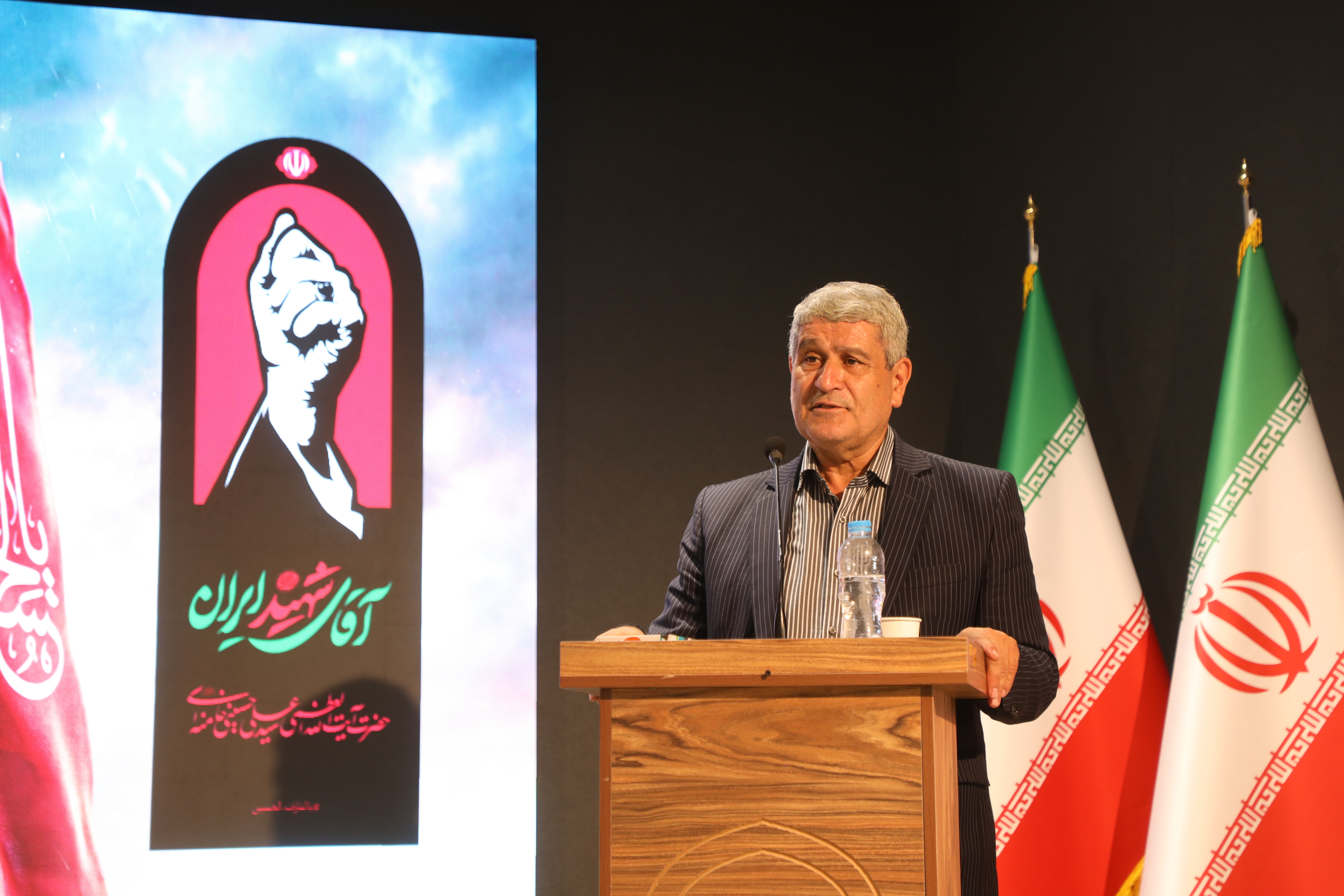
Mehrzad Hamidi, Acting President of Farhangian University, described the Martyr Leader of the Islamic Revolution as the architect of realizing the vision of a “strong and progressive Iran,” emphasizing that, by relying on scientific and military capabilities, he transformed this vision into a tangible reality at the highest possible level.
According to the Public Relations Office of Farhangian University, on June 14, 2026, Mehrzad Hamidi, Acting President of Farhangian University, addressed a commemorative ceremony held at the university’s central headquarters in honor of the Martyr Leader of the Islamic Revolution, Grand Ayatollah Imam Khamenei, and the members of his family who were martyred. He began by paying tribute to the exalted soul of the late Imam Khomeini and the esteemed Martyr Leader of the Ummah, and by expressing his wishes for the Supreme Leader to enjoy a long, honorable and blessed life.
Referring to verse 96 of Surah Maryam, Hamidi stated that divine principles are immutable. He explained that, according to divine tradition, when a person believes and performs righteous deeds, love and affection for that person are placed in the hearts of the people, making him beloved among different segments of society.
Hamidi identified faith in God and righteous action as among the most prominent characteristics of the Martyr Leader, stating that these outstanding qualities contributed to one of the remarkable events in history being created by the Iranian people. He added that the people of Iran demonstrated an extraordinary display of pride and national strength during the farewell and funeral ceremonies for the Martyr Leader of the Ummah, reflecting his profound popularity among Iranians, Shiites and freedom-seeking people around the world. He described the event as unprecedented in its scale and significance.
Explaining the positions and legacies of the late Imam Khomeini and the Martyr Leader, Hamidi described them as prominent examples of transforming “ideas into reality” and “intentions into outcomes.” He noted that Imam Khomeini authored the book Wilayat al-Faqih and established the Islamic Republic despite widespread international opposition. The Martyr Leader, he added, envisioned a strong, powerful, progressive and scientifically advanced Iran with significant military capabilities and succeeded in realizing this vision to the highest possible level during his leadership.
The Acting President of Farhangian University, comparing the resilience of nations in the face of comprehensive U.S. pressure, noted that many countries succumb to American military and economic threats, whereas Iran has demonstrated a level of strength that has enabled it not only to withstand such pressure but also to confront the United States through steadfastness and resistance and, strategically, to emerge victorious in this arena.
At the conclusion of his remarks, Hamidi emphasized the need to draw upon the Martyr Leader’s statement and intellectual framework in pursuing the goals of the Islamic civilization envisioned in the Second Phase of the Islamic Revolution. He stated that some of the country’s greatest advances in the exact sciences and military sciences took place during the Martyr Leader’s leadership.
He stressed that the intellectual framework of the Martyr Leader should today serve as a guiding roadmap in the social, economic, cultural, educational and teacher-education spheres, with the ultimate aim of contributing to the realization of a new Islamic civilization.


Your Comment :