
Transformational Shift at Farhangian University: Moving from Accelerated and Formalistic Training toward Reflective and Deep Teacher Education

The Acting President of Farhangian University has outlined a new educational approach, emphasizing the need to move away from speed-driven and formalistic training toward an approach grounded in reflection, critical thinking and intellectual engagement. He described this approach as a foundation for preparing “teachers of the desired standard” in line with the Fundamental Transformation Document of Education.
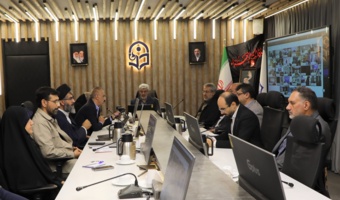
According to the Public Relations Office of Farhangian University, Mehrzad Hamidi, Acting President of Farhangian University, speaking at the 443rd meeting of the University Board of Directors, emphasized the need for continuous monitoring of the performance of Farhangian University’s provincial units. He particularly referred to the Mehr Opportunity Project and announced that monitoring teams comprising university deputies and managers would be dispatched to the provinces.
He stated that, based on a defined framework, the teams would conduct field visits to provincial units and assess infrastructure, the quality of educational, cultural and research activities, and particularly dormitory conditions. They will subsequently submit expert reports to support decision-making.
Hamidi highlighted the strategic distinction between Farhangian University and other higher education institutions in the country, describing the university’s primary mission as preparing “teachers of the desired standard.” He noted that the selection, specialized education and preparation of teachers for entry into the country’s education system constitute a critical responsibility requiring precision, careful planning and sustained effort.
Criticizing a purely mechanical and speed-oriented approach to teacher education, he identified “reflective teacher education” as one of the university’s transformational strategies for developing well-rounded teachers. He added that teacher education requires an environment conducive to reflection, interaction, participation and dialogue—an environment in which the acceleration of processes does not deprive students of opportunities for thinking, discussion and deeper learning.
The Acting President of Farhangian University also addressed the growing dominance of the virtual environment in student teachers’ lives and warned that excessive reliance on “machine-mediated and digital” interactions could weaken their sense of identity. He emphasized that the dormitory environment should serve as a hub for identity development and the strengthening of student teachers’ social skills.
Accordingly, he stressed that dormitory environments should be organized through an interactive, participatory and multifunctional approach encompassing educational, cultural and sports dimensions. Such an environment, he explained, should encourage students to move beyond excessive individualism shaped by virtual spaces toward vitality, interaction and social responsibility.
Hamidi also emphasized the need for decentralization and streamlining the university’s organizational structure, calling for the maximum possible delegation of executive authority to the provinces. He stated that the central administration should focus on policymaking, strategic guidance and oversight and refrain from direct involvement in executive affairs.
Accordingly, the Deputy for Planning and Resource Development was tasked with identifying unnecessary organizational positions at the central administration and transferring them to faculties and provincial universities in order to strengthen their executive capacity.
At the conclusion of his remarks, Hamidi emphasized the support of the central administration for deep, problem-oriented and dialogue-generating research, cultural and educational programs at the faculties of Farhangian University’s provincial units.



Your Comment :