
President of Farhangian University: The Intellectual Legacy of the Martyred Leader of the Revolution Holds Profound Social, Cultural, and Educational Capacity
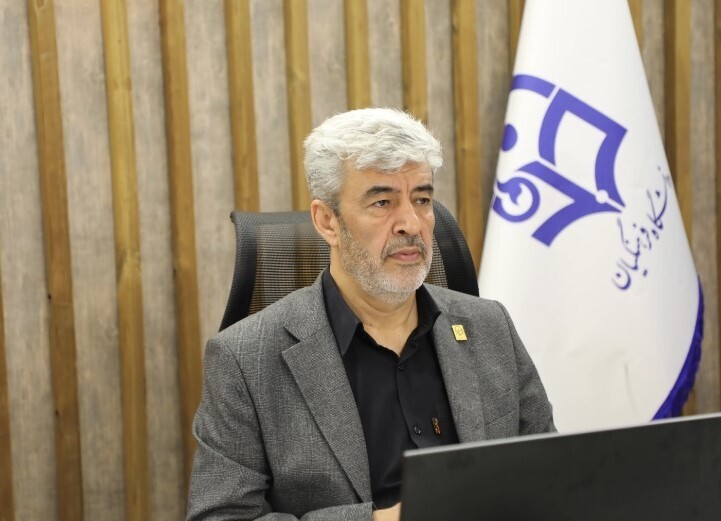
Dr. Rajab‑Ali Borzooei outlines four key principles of the martyred leader’s thought for Iran’s education and teacher‑training system.
Tehran — Dr. Rajab‑Ali Borzooei, President of Farhangian University, highlighted the profound intellectual and educational capacity of the legacy left by the martyred leader of the Islamic Revolution, emphasizing that his ideas provide a powerful framework for shaping the country’s educational and teacher‑training systems.
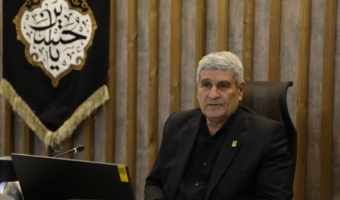
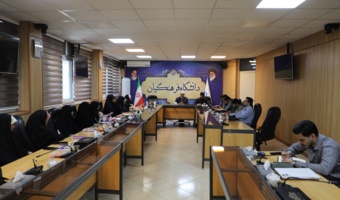
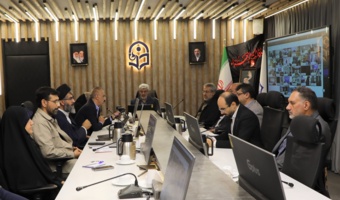
According to the Public Relations Office of Farhangian University, Dr. Borzooei delivered his remarks on April 8, 2026 (19 Farvardin 1405) during a virtual session titled “A Philosophy for Resistance‑Based Education in the Thought of the Martyred Leader.” The event was held on the occasion of the fortieth day of commemoration (Arbaeen) of the martyred leader of the Revolution and the other martyrs of the “Ramadan War,” and was attended by faculty members and staff of the university.
At the outset of the session, Dr. Borzooei offered his condolences and congratulations on the occasion of the Arbaeen of the martyred leader and the martyrs of the recent conflict, stating that Farhangian University will forever remain indebted to the guidance and support of the martyred leader of the Revolution.
He emphasized that the most enduring legacy of any great figure is their intellectual and philosophical heritage, adding that the thought of Imam Khamenei, the martyred leader, possesses immense social, cultural, and educational potential capable of guiding contemporary educational discourse.
Dr. Borzooei then elaborated on the most significant ideas of the martyred leader for the national education system and teacher education, presenting them in four major conceptual axes.
In the first axis, Dr. Borzooei explained that, within the intellectual framework of the martyred leader, the ultimate objective of the education system is the construction of a “New Islamic Civilization.” From this perspective, the mission of education extends far beyond the transmission of knowledge and literacy; rather, it centers on the formation of human character and the preparation of individuals capable of contributing to the revival and advancement of a civilizational project.
He stressed that identity formation among students is a central component of this vision. Students, he noted, must understand who they are, possess awareness of their historical roots and Iranian‑Islamic identity, and recognize their role in advancing toward the “peaks of progress and justice.” According to this outlook, identity‑building constitutes one of the most fundamental responsibilities of the education system.
Dr. Borzooei further explained that, in the martyred leader’s perspective, the Iranian‑Islamic model of education differs fundamentally from secular models. Education, in this framework, integrates ethics, rationality, and spirituality to cultivate individuals who are both competent and committed, shaped by cultural self‑awareness rooted in Iranian‑Islamic civilization while maintaining clear intellectual independence from Western cultural paradigms.
In the second axis, Dr. Borzooei addressed the significance of defense and resistance within the intellectual framework of the martyred leader. He noted that resistance in this worldview is not merely reactive or limited to the battlefield; rather, it represents an active and creative approach that extends to the realms of culture and cognition.
He explained that the martyred leader expanded the concept of defense beyond military confrontation, identifying the cognitive and cultural front as one of the most decisive arenas of struggle. In this framework, resistance is understood not simply as a tactical response but as an identity‑forming discourse that shapes the character and consciousness of individuals.
Accordingly, a “resilient student,” he noted, is one who stands firm against doubts, consumerism, and hostile cultural influences, demonstrating intellectual independence and moral steadfastness.
Dr. Borzooei also highlighted the future‑oriented dimension of resistance in the leader’s thought. Resistance, in this perspective, is not merely aimed at preserving the present but is directed toward a forward‑looking vision inspired by the awaited Mahdavi future, encouraging innovation and adaptation within the educational system as society evolves.
In the third axis, Dr. Borzooei emphasized the importance of nurturing revolutionary and politically aware individuals within the educational system. According to the interpretation presented by the martyred leader, being revolutionary signifies remaining up‑to‑date, fearless in the face of threats, committed to justice, and resolute in confronting corruption.
He noted that this dynamic understanding of revolutionary identity has contributed to the emergence of a generation of innovative youth whose scientific and technological achievements have strengthened the country’s defensive and technological capabilities.
Dr. Borzooei also stressed that political education is an essential dimension of schooling in this framework. Education, he explained, should cultivate students who are politically aware—though not partisan—enabling them to develop sensitivity toward national history, political developments, and their cultural identity.
Within this vision, universities and student movements also play an important role, as young people are expected to remain attentive to regional developments and the geopolitical realities of West Asia.
In the fourth axis, Dr. Borzooei addressed the position of teachers and Farhangian University within the intellectual framework of the martyred leader.
“In this vision,” he stated, “teaching is not merely a profession. The teacher is the engineer of future generations and the guardian of the country’s future.”
He explained that, within this discourse, teachers and professors of Farhangian University are entrusted with a profound cultural and social mission. They are regarded not simply as educators but as frontline actors in the cultural and cognitive arena, responsible for explaining the achievements of the Islamic Revolution and articulating its values for new generations with wisdom, rationality, and compassion.
Dr. Borzooei also outlined the major activities undertaken by Farhangian University during the period of the Ramadan War. He stated that despite the profound grief caused by the assassination of the spiritual leader of the nation, the university swiftly established a national cultural headquarters to coordinate a wide range of initiatives.
These activities included cultural, social, educational, research, counseling, media, and relief programs, implemented through diverse platforms such as analytical forums, scholarly articles, media productions, public outreach, and the establishment of cultural stations and university booths across the country.
In closing, Dr. Borzooei paid tribute to the memory of the martyred leader and all those who lost their lives alongside him, including commanders, officials, ordinary citizens, women, children, teachers, and students.
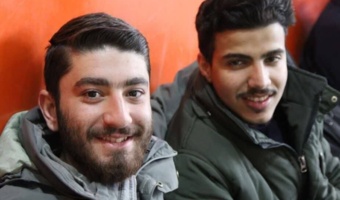
He also honored members of the Farhangian University community who were affected by the conflict, particularly student‑teachers and staff whose family members were martyred. Among them, he specifically remembered student‑teacher martyrs Amir‑Hossein Saljouqi and Amir‑Hossein Esmaeilu, asking participants to commemorate their sacrifice and the sacrifices of all martyrs.

Your Comment :