
Minister of Education: The University of Teacher Training is the Main Track for Reforming the Education System
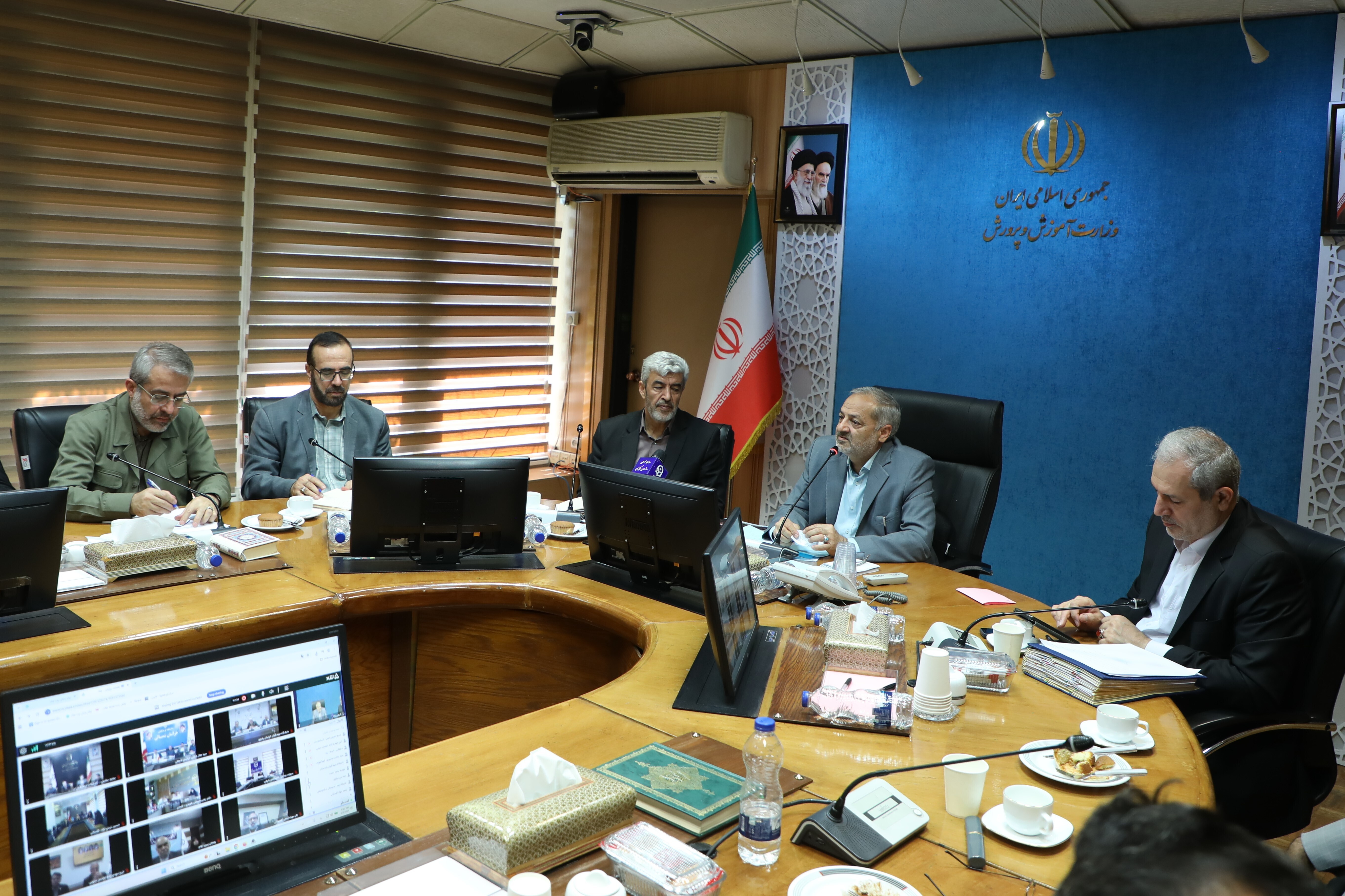
In a meeting of the heads of the University of Teacher Training across the country, Alireza Kazemi, Minister of Education, identified the Ministry of Education and the University of Teacher Training as a unified entity aimed at achieving the goals of the education system.
On Wednesday, June 3, 2026, Kazemi, referring to himself as a member of the University of Teacher Training, expressed his commitment to helping the university fulfill its mission. He emphasized the importance of remembering their primary mission during these critical times, which he defined as defending the core of the Islamic Republic of Iran in the field and on the streets. He stated that this duty is a significant benchmark for all universities, especially the University of Teacher Training, and should be the standard by which the performance of provincial managers and officials is evaluated.
Kazemi further asserted that they expect more than current outcomes. He stressed the urgent need for the active presence and engagement of trainee teachers in the national context. He highlighted his call for a broad educational environment during the month of Ramadan and beyond, proposing that the University of Teacher Training should lead this extensive educational initiative that spans the nation.
Addressing the complex hybrid warfare instigated by enemy forces, including American and Zionist influences, he remarked on the challenging times ahead. Kazemi stated that society's resilience against cultural and economic pressures exploited by the enemy must be prioritized.
He described the University of Teacher Training as the most fundamental pillar capable of reforming the education system, occupying a unique position at the forefront of educational institutions. He noted the profound and precise insights from the Martyr Leader regarding the university, urging all stakeholders to heed these reflections.
Kazemi also mentioned the necessity of collaboration between the Ministry of Education and the University of Teacher Training, indicating that issues related to the university should be prioritized and earnestly pursued in unison. He underlined the importance of streamlining the organizational structure of the university's central administration, urging it to function as a policymaking and planning body in strategic areas, managed efficiently with a limited workforce.
He called for the delegation of executive responsibilities to provincial universities and stressed that policy-making at the central organization should be formulated solely at the national level, allowing for regional and cultural strategies to be tailored to each province's specific needs.
Kazemi reiterated that the primary function of the central organization should involve resource allocation, policy communication, regulation dissemination, supervision of strategic program execution, and evaluation of performance indicators in provincial universities.
He emphasized "teacher training" as the university's paramount mission and firmly opposed any deviation from this objective. He advocated for renaming the university to "Teacher Training" to better align with its responsibilities. Kazemi stressed the need to deliver exceptional teachers to society, highlighting the critical importance of training and expertise in the teaching profession.
He further defined the essence of the University of Teacher Training as centered on teacher development and cultivating teaching skills. He insisted that all educational, religious, and perceptive activities must align with the core mission of "teacher training," as this remains the overarching policy of the Ministry of Education.
Kazemi described the formulation of specialized promotion regulations for faculty at the University of Teacher Training as essential for a mission-oriented institution. He recognized the need for the university to adapt to societal needs, acknowledging past efforts while indicating that significant work lies ahead. The current curriculum must undergo transformation, reform, and revision to bridge gaps and keep pace with contemporary societal demands.
He stressed the inclusion of technologies and digital skills in the curriculum, emphasizing that improvements in teaching resources pave the way for advancements in human resources. Systematic evaluations that prioritize teacher training must also be prioritized.
Acknowledging the ongoing state of war, Kazemi urged all faculty at the University of Teacher Training to transform their classrooms into cultural-educational centers and platforms for resilience against adversaries. He underscored the importance of integrating both educational and cultural activities into this strategy.
He firmly mentioned that evaluations of trainee teachers must meet the standards set by the Islamic Republic of Iran and that annual assessments should be prioritized.
Kazemi called on educational officials at universities to ensure the academic year begins on time and with top-notch quality in classes, urging the proper conduct of evaluations that respect the dignity of faculty.
He stressed the necessity for complete readiness for the upcoming academic year, urging university leaders to focus on addressing related matters with maximum effort and the formation of special working groups. Providing suitable environments, equipment, and human resources is essential for a smooth and worry-free academic year start.
In conclusion, Kazemi expressed a commitment to resolving issues collaboratively and amicably, always advocating for unity, friendship, and sincerity. He emphasized that unity within and outside the educational community, together with social and political cohesion, is vital for achieving glorious victories for the oppressed Iranian people and the resistance front.


Your Comment :