
“A Teacher Cannot Be Trained Without a Strong Connection to the School”
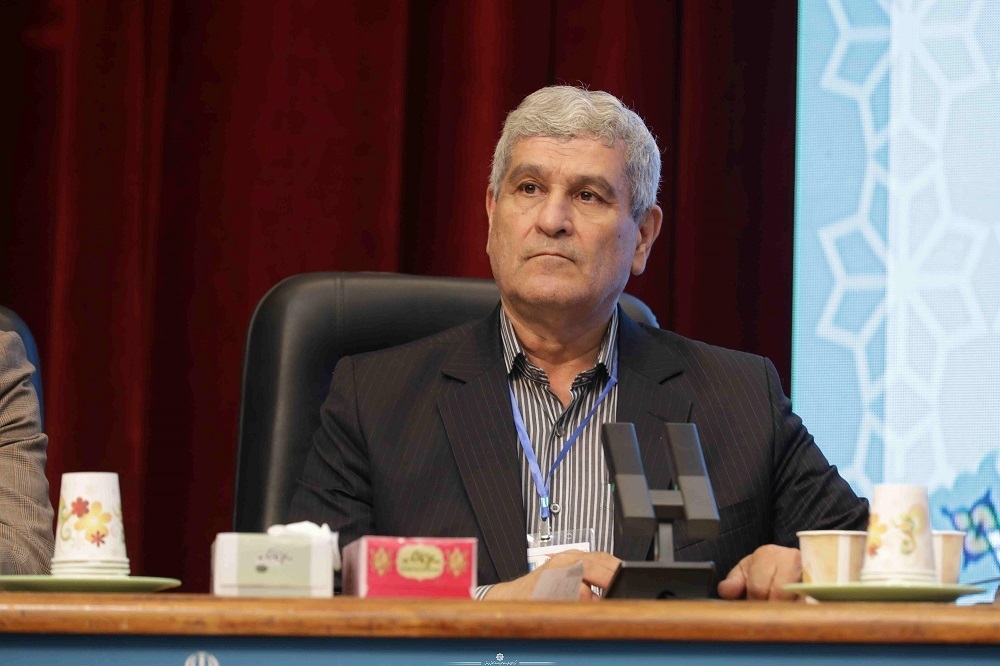
The Head of Farhangian University announced that approximately 25,000 teacher-students would be admitted to the university in the new academic year, while nearly 50,000 candidates will undergo professional teaching competency assessments. He identified providing dormitory capacity under the “Mehr Opportunity Project,” expanding teaching practicum programs, and developing affiliated schools as the university’s three main priorities ahead of the new academic year.
According to the Public Relations Office of Farhangian University Central Organization, citing the Information and Public Relations Center of the Ministry of Education, Mehrzad Hamidi, Head of Farhangian University, outlined the university’s plans for the new academic year at the 39th National Conference of Heads of Education Departments.
He stated that approximately 25,000 teacher-students would enter Farhangian University in the new academic year, while nearly twice that number of candidates will be referred to the university to undergo the teaching competency assessment process.
He added that assessing candidates’ teaching competencies, providing dormitory facilities through the “Mehr Opportunity Project,” and expanding teaching practicum programs and affiliated schools are the three principal priorities of Farhangian University before the start of the academic year. These initiatives will be pursued in cooperation with provincial directors general of education and heads of education departments in cities and districts.
Assessment of 50,000 Teacher-Student Candidates
Hamidi explained the teacher-student admission process, noting that under the current regulations, 15 percent of the national entrance examination, 10 percent of the specialized examination, 50 percent of academic records, and 25 percent of competency assessment contribute to admission to the first semester of teacher-student programs.
The Head of Farhangian University added that a nationwide team comprising provincial representatives, Farhangian University representatives, and selection officials has been established to implement the process in cooperation with the Ministry of Education’s Deputy Directorate for Administrative and Financial Affairs and the Human Resources Planning Center.
He identified verbal, written, analytical, interactive, cognitive, and learning abilities among the competencies to be assessed, adding that candidates’ creativity, sense of responsibility, enthusiasm, and motivation will also be evaluated.
Hamidi explained that candidates would enter a professional interview setting where predetermined scenarios and standards will be applied. The questions will vary, and following observation and documentation of candidates’ performance, scores will be recorded independently.
Provincial Headquarters Responsible for Competency Assessment
Regarding implementation of the assessment process in the provinces, Hamidi said that the process will be conducted under the leadership of a provincial headquarters chaired by the provincial Director General of Education. These provincial headquarters will also be responsible for addressing potential appeals.
He added that each assessment group will include an experienced teacher, a psychologist, a faculty member, an admissions officer, and a representative of the university’s security and protection department, who will oversee implementation of the process.
Hamidi identified mobilization of resources, leadership, coordination, supervision, safeguarding, and accountability as among the responsibilities of provincial Directors General of Education and called on provincial officials to organize their competency-assessment headquarters as soon as possible.
Urgent Need to Expand Dormitory Capacity
The Head of Farhangian University also addressed the issue of accommodation for teacher-students, noting that with an additional 25,000 students entering the university, providing sufficient dormitory capacity has become an urgent necessity in some provinces.
He identified Razavi Khorasan, Hormozgan, Khuzestan, Fars, Markazi, Hamadan, Kerman, East Azerbaijan, Tehran, and Lorestan as among the provinces requiring greater attention in terms of student accommodation. He stressed that dormitory room capacity in these provinces must be determined and secured as soon as possible.
Hamidi described the “Mehr Opportunity Project” as the second priority of Farhangian University ahead of the new academic year, emphasizing that issues related to teacher-student accommodation should be addressed through close cooperation between provincial education authorities and Farhangian University.
Expanding Teaching Practicum: “A Teacher Cannot Be Trained Without a Connection to the School”
He identified the expansion of teaching practicum programs and affiliated schools as the university’s third priority, stressing: “Teaching practicum must take place in schools, because a teacher cannot become a teacher while disconnected from the school.”
Comparing teacher education with medical education, Hamidi said: “Just as medical education alongside hospitals contributes to training skilled physicians, teacher education must also maintain a continuous and meaningful connection with schools and the education system.”
He added that proposals have been submitted to establish affiliated practicum schools with dedicated structures and defined responsibilities in all provinces, and that teaching practicum will be pursued through community-based approaches and new models.
Development of Farhangian University’s Strategic Plan
The Head of Farhangian University also announced the development of the university’s strategic plan, stating that it has been designed in accordance with the country’s upstream policy documents, particularly the Fundamental Transformation Document of Education.
The plan encompasses transforming the overall architecture of the curriculum, expanding teaching practicum courses, transforming human resource development, spatial planning, and advancing the vision of a comprehensive, community-oriented, and provincial university.
Hamidi identified other key components of the plan as transforming educational, cultural, and sports programs by utilizing students’ capacities; enriching students’ leisure time and residential campus life; diversifying and expanding financial resources; transforming the central administrative structure in favor of provincial units; and restructuring provincial units in favor of faculties and strengthening a faculty-centered approach.
He also identified the development, promotion, and mainstreaming of research within faculties as another priority of Farhangian University.
In conclusion, Hamidi stressed that implementing the programs related to competency assessment, the Mehr Opportunity Project, and the expansion of teaching practicum requires strong cooperation from provincial education authorities. He added that the detailed plans for the Mehr Opportunity Project and the expansion of teaching practicum will be finalized and officially communicated once the relevant procedures are completed.



Your Comment :