
Scenarios for the New Academic Year for Teacher-Students; Review of the Salary Deduction Law
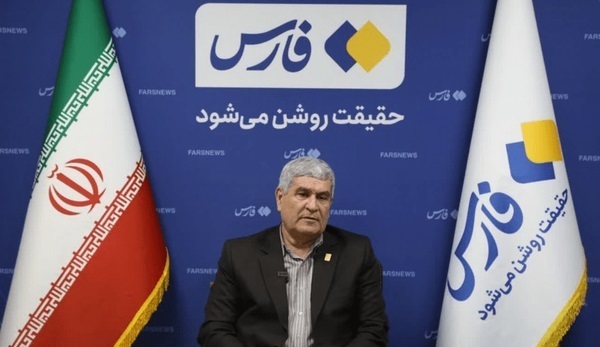
The Head of Farhangian University outlined the university’s plans for the beginning of the new academic year, the status of graduates, salary deductions for teacher-students, and the situation of retired faculty members.
According to the Public Relations Office of Farhangian University Central Organization, citing the Education Group of Fars News Agency, Mehrzad Hamidi, a full professor at the University of Tehran and a veteran educator, served for eight years as Deputy Minister of Education for Physical Education and Health. He was appointed Head of Farhangian University on June 6, 2026. On the occasion of National Journalists’ Day, Hamidi appeared at Fars News Agency and responded to journalists’ questions.
Farhangian University’s Plan for the Beginning of the New Academic Year
Fars: You have not been at Farhangian University for very long. What is your assessment of the university’s current situation, and what measures have you taken during this period? With the new academic year approaching, what is the status of examinations and the university’s preparations for the new academic year?
Our first project is the “Mehr Opportunity Project.” Following the interruption caused by the holidays and the period of virtual education, we had to anticipate different scenarios. The Office of Teacher-Student Affairs is preparing the Mehr Project, and I have emphasized to all deputies on the university’s Board of Directors that they should contribute to advancing this initiative.
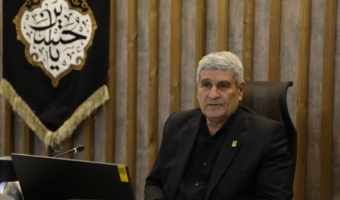
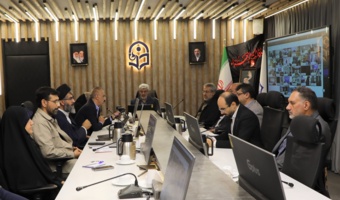
To ensure the necessary level of preparedness, we immediately held a seminar for the heads of provincial Farhangian universities. One of the main topics of the meeting was the Mehr Opportunity Project, while another focused on competencies and identifying the qualifications of teacher-students who are expected to enter the university. The examinations and interviews for these candidates were also addressed within this framework.
For the teacher-student candidates referred to us, whose number in the provinces is twice the available capacity, we have completed the necessary organizational arrangements. We have established new frameworks for determining their qualifications and discussed them with the provincial university heads at the seminar. A special committee has also been established for this purpose.
These two projects are among the programs that must be pursued for the beginning of the new academic year. For the Mehr Project, we have considered several scenarios, including virtual and in-person education. We have also prepared a blended scenario combining virtual and in-person instruction so that we can proceed according to changing circumstances and requirements.
The Ministry of Education has decentralized decision-making regarding the method of instruction and delegated authority to the provinces and governors, and at the city level to governors and local officials, so that they can determine, based on local conditions, whether instruction should be conducted in person or virtually. We also follow the policies of the Ministry of Science and have reviewed its scenarios. If conditions permit, our preference is to hold classes in person.
Fars: Are you prepared for in-person education?
We have maintained all the necessary preparations for in-person education. Dining facilities, dormitories, and other facilities that required updating during the interruption period must be ready. Preparations for classroom attendance, class organization, and other related matters are also underway.
Our preference is in-person education, but we have also prepared hybrid and virtual scenarios so that we will be ready if circumstances require their implementation.
Developing a Four-Year Roadmap for Farhangian University
Alongside these two projects, we have also been working on the university’s roadmap and four-year strategic plan. I have sought to develop this plan by drawing on the experiences of previous managers, the university’s requirements, and my understanding of both the education system and higher education.
We presented an almost-final version of the plan during a visit to Tehran Province and received positive feedback from faculty members and other participants. We are now validating and reviewing the plan with key stakeholders, including the Supreme Council of the Cultural Revolution, the Ministry of Education, and other relevant bodies, so that we can move forward with its implementation.
Academic Leadership as One of the University’s Strategic Priorities
One of the key components of our plan is “academic leadership.” Academic leadership does not simply mean that we are active in academic matters; it has broader dimensions.
Academic leadership means that the university should become a point of reference within society. We need faculty members and theorists who are capable of analysis and can address educational and child-development issues through national broadcasting, the media, various institutions, and professional workshops.
In other words, when issues concerning the education of children, school students, young children, and adolescents are discussed, families should be able to refer to Farhangian University and its faculty members and say that a particular recommendation has been put forward by the university. This is another dimension of the academic leadership we are seeking to establish.
Faculty-Centered Development and Expansion of Cultural and Educational Activities
Another component of my plan is a faculty-centered approach. Just as school-centered education was one of the main principles in the Ministry of Education, emphasizing engagement with schools and strengthening school-based projects, I have placed faculties at the center of activities at Farhangian University.
The faculty is where students study, where student residences are located, and where residential campus life takes place. We must work to expand cultural and educational activities within faculties in a way that covers the majority of students living in dormitories.
Even students who live outside university dormitories should find residential programs sufficiently diverse and attractive to encourage them to participate in campus activities and residential student life.
Since the organizational, cultural, and educational structures and positions have not yet been extended adequately to the dormitory and faculty levels, we need to expand cultural, educational, and leisure-time programs across dormitories and university units.
Alongside academic matters, we must also pay attention to students’ educational and developmental needs. Our target population consists of 113,000 teacher-students enrolled at Farhangian University.
For this reason, we have initiated a structural redistribution. Additional positions at the central administration will be transferred to the provinces, while surplus provincial positions will be transferred to faculties. We will review the duties and responsibilities of the central administration and provinces and will also revise the responsibilities of faculties while preserving their institutional role and drawing on the valuable experience of campus-based units.
The goal is to ensure that cultural, educational, and leisure-time activities at the faculty level are developed in such a way that students, alongside their academic classes, have access to comprehensive and widely available cultural and educational programs.
Implementation of 10 Strategic Areas at Farhangian University
Fars: How many areas have you identified for the university’s four-year plan?
We have identified 10 areas. It may be interesting for you to know that I have already explained two of them. These 10 areas are still being finalized, and wherever we have reached sufficient consensus and confidence, implementation has already begun. We have not stopped the work.
We are continuing, with strength, the initiatives launched by previous managers, including Dr. Rjabali Barzoui, who took valuable, constructive, and promising steps. A change in management should not interrupt these processes, and our effort is to accelerate their implementation.
25,000 New Teacher-Students on the Path to Entering the Education System
Fars: How many graduates do you expect to enter schools in the new academic year? It has also been reported that final-year students are expected to enter schools. Is this correct?
We held the summer semester despite the existing limitations and despite the announcement that it would not be held for other universities, so that final-year students could graduate.
Many students will graduate. There is normally a small percentage of students who remain behind. We have also made arrangements for these students at their places of study so that they can enter schools while completing any remaining courses.
We are expecting approximately 24,000 new teacher-students, and approximately the same number of students will graduate.
Fars: So, are 24,000 people expected to enter the Ministry of Education?
There are 23,063 bachelor’s degree graduates and approximately 2,000 associate degree graduates in primary education, making a total of 25,063 graduates. We also have seventh-semester students who, if the Ministry of Education requires them, could bring the figure to approximately 28,470.
Fars: The Minister of Education had said that 30,000 graduates of Farhangian University would enter schools.
The figure of 30,000 includes graduates of Shahid Rajaee Teacher Training University. It is a combined figure. Our number is also slightly higher than 24,000, but graduates of Shahid Rajaee Teacher Training University will also enter schools.
Summer-Semester Examinations to Be Held Remotely
Fars: Summer-semester students have many questions about how their examinations will be conducted, particularly whether they will be held in person or remotely. What is the plan?
According to the information obtained from the university’s Deputy Directorate for Education, given the geographical dispersion of the various units and departments, the current plan is for their examinations to be held remotely.
Teacher-Student Salary Deductions: An Issue Requiring Legislative Reform
Fars: Salary deductions for teacher-students have been a longstanding source of complaints. When you were appointed, active teacher-students at Farhangian University also wrote a letter and gave interviews on this issue. Is a review of the matter planned, and have you taken action on it?
The issue of salary deductions for teacher-students has been a concern for us, but it is rooted in legislation. Authorization and funding arrangements have been established for dormitory services, meals, welfare services, and related preparations. Once these responsibilities have been assigned, however, no additional funds are provided to the university.
In the meetings we have held, we examined whether the law could be amended so that the relevant funds would be provided directly to the university. If this can be achieved, the problem would be resolved.
Fars: So, will you pursue a review of the law?
The issue is that an amendment to the existing legislation needs to be pursued through a legislative proposal or bill so that the relevant provision can be revised.
This issue has already been raised in our meetings. Students may not be aware of the legal background and may assume that a separate budget line has been allocated to the university. The legislature has specified that these costs must be covered from a particular source. When the issue is discussed and different narratives emerge, students may feel that the university is simply trying to justify the situation.
To prevent such a perception, I instructed the legal department to examine the process for amending the law. They are currently studying the matter, and this is one of the areas that needs to be changed.
Follow-Up on the Status of Retired Faculty Members at Farhangian University
Fars: What is the situation of retired faculty members who have objected to their retirement and have held several gatherings? Have they approached you, and has their problem been resolved?
I have held several meetings with them. They are not a single group. Some are final-year scholarship faculty members, some are teacher-doctors, and others are retirees who have received retirement orders subject to retirement provisions.
I have met with them. They regularly send me messages, and I read their messages. Whenever necessary, I contact them directly.
Fars: So your communication and interaction with them is continuing?
Yes. The reality is that some of them have had reductions in their academic ranks over time. Action is now underway to restore these ranks for some of them, and we are examining whether it is possible to take measures to amend their salary and employment orders. We have invited prominent and knowledgeable individuals who can help pursue this matter.
Fars: Who would be eligible for restoration of their salary and employment orders?
This concerns retirees, particularly those whose academic ranks were reduced over time, subsequently adjusted through an equivalency process, and later placed under retirement-related conditions again. We are holding expert meetings and need to ensure that informed specialists participate so that we can determine whether any practical solution can be implemented.


Your Comment :