
Head of Farhangian University: Formal Education Think Tank Should Support University Decision-Making through Policy Packages
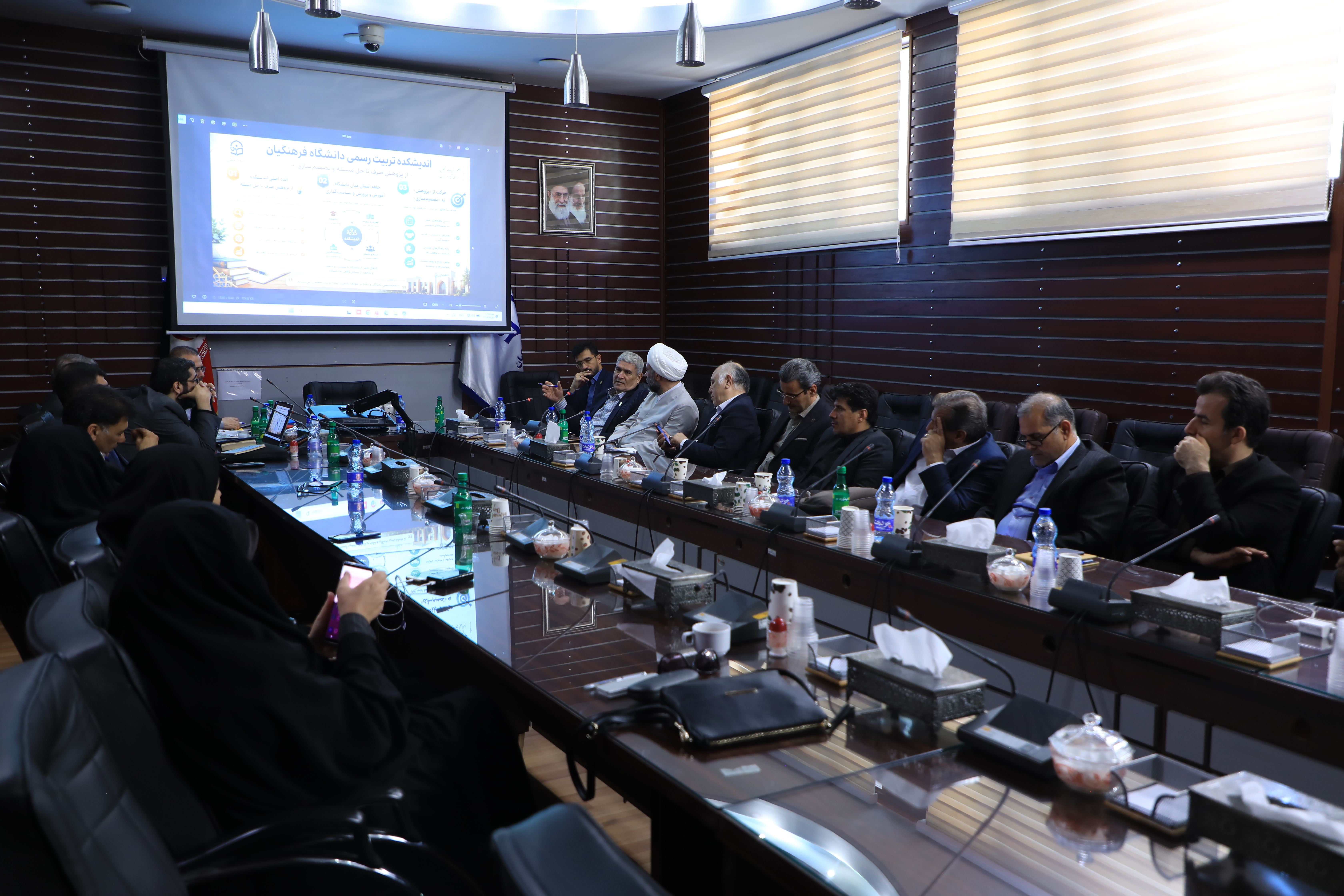
The Head of Farhangian University, speaking at a specialized meeting of the Formal Education Think Tank, emphasized the role of think tanks in identifying the university’s system of challenges and developing policy packages. He also stressed the need to utilize the capacities of experts and faculty members to strengthen evidence-based decision-making and move from drafting policy documents toward their effective implementation.
According to the Public Relations Office of Farhangian University, the specialized meeting of the university’s Formal Education Think Tank was held on August 6, 2026, at Nasibeh Campus in Tehran, with the participation of Mehrzad Hamidi, Head of Farhangian University, members of the think tank’s Board of Trustees, secretaries of its specialized working groups, and a number of faculty members.
At the beginning of the meeting, Hamidi expressed his appreciation for the establishment of the Formal Education Think Tank and described it as a valuable capacity for the future of Farhangian University. He stated that the think tank should provide a scientific, open, and problem-oriented environment for intellectual deliberation, enabling university managers to make effective decisions through accurate identification of challenges, development of policy packages, and presentation of practical solutions.
Emphasizing that the university needs collective wisdom and a strong scientific foundation for decision-making more than ever, the Head of Farhangian University added that valuable and comprehensive upstream policy documents are currently available in the field of education and teacher education. He stressed the need for a pragmatic approach to translating the potential of these documents into operational programs and effective measures.
Welcoming the frank, scientific, and critical environment of the think tank, Hamidi said that expert perspectives, constructive criticism, and scholarly recommendations can contribute to improving the quality of university governance. He emphasized that the think tank should support the university in addressing emerging challenges through continuous monitoring of issues and foresight.
Key topics discussed at the meeting included examining an optimal model for the recruitment and admission of student teachers; improving the quality of teaching practicum; reviewing various dimensions of student-teacher education; utilizing emerging technologies and artificial intelligence in education; expanding educational simulations in the basic sciences; strengthening laboratory infrastructure; addressing the social, economic, and technological skills required by future teachers; and developing policy solutions to existing challenges.
Members of the think tank also emphasized the need to expand the national network of intellectual deliberation within Farhangian University, utilize the expertise of faculty members across the country, strengthen the implementation mechanisms for the think tank’s recommendations, and support its scientific and specialized activities.
At the conclusion of the meeting, Hamidi expressed his appreciation for the efforts of the think tank’s members and emphasized the continuation of specialized meetings, the use of the capacities of academic experts, and the transformation of the think tank’s achievements into policy and operational packages. He described the Formal Education Think Tank as one of Farhangian University’s effective capacities for advancing transformation, improving the quality of teacher education, and strengthening scientific governance at the university.



Your Comment :