
Head of Farhangian University: Transforming the Management System through an “Inverted Pyramid” Model; Students at the Top and Managers Serving the Nation’s Future Builders
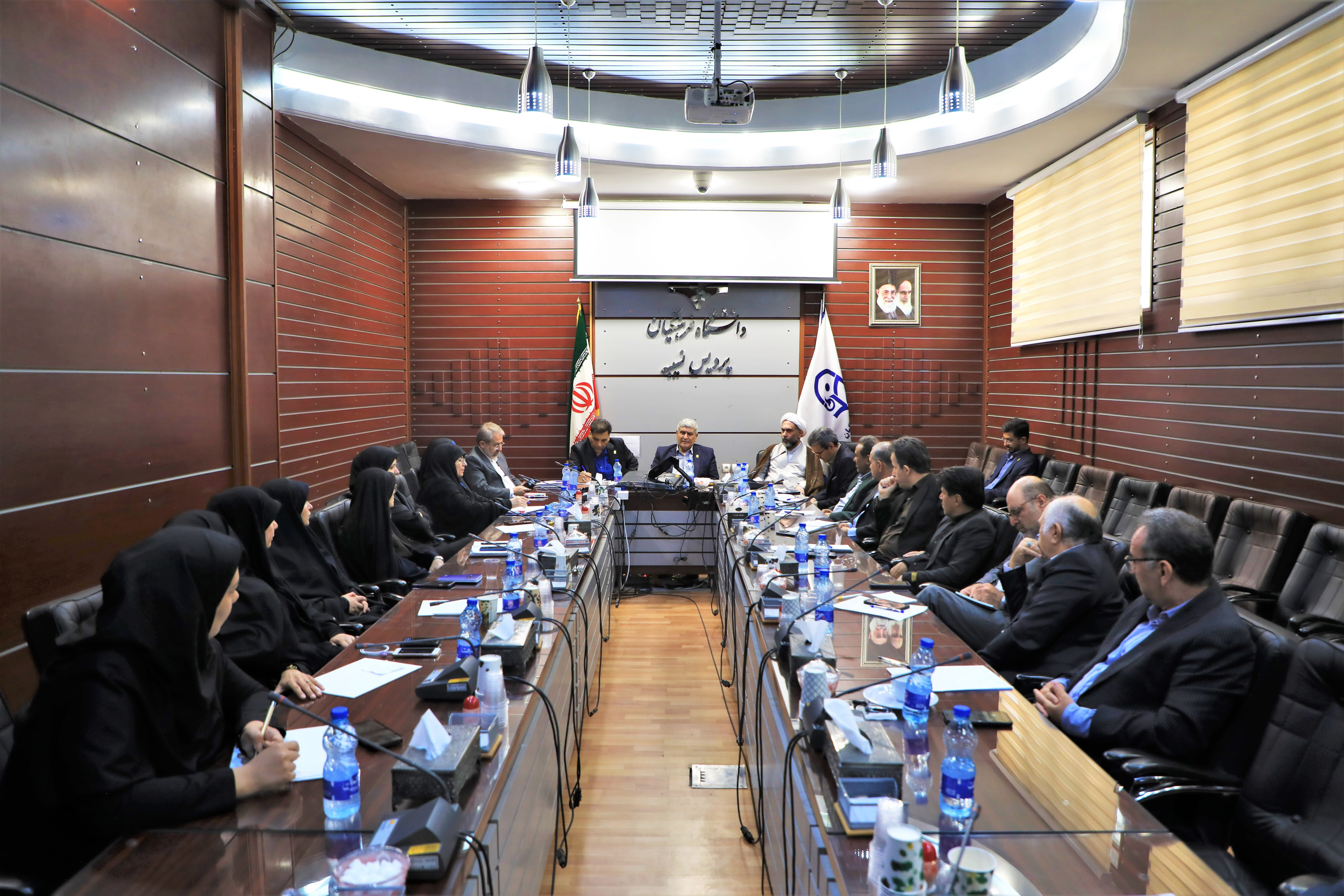
Prof. Mehrzad Hamidi, Head of Farhangian University, at a cordial meeting with managers of Farhangian University in Tehran Province, emphasized the need to shift the management discourse from “sharing grievances” to “problem-solving.” Explaining the “inverted pyramid” model for the organizational structure, he described student teachers as the university’s true principals and the central administration as their service provider. He also announced a firm plan to streamline central administrative positions and delegate extensive authority to provincial units and faculties.
According to the Public Relations Office of Farhangian University’s Central Organization, Mehrzad Hamidi made the remarks during a cordial meeting with managers of Farhangian University in Tehran Province, held on Tuesday, August 6, 2026, at Nasibeh Campus. Referring to the strategic position of the capital in the country’s administrative system, he stated that Tehran has always played a role in setting models and that administrative standards developed in Tehran serve as models for other provinces. Therefore, Tehran should present a “comprehensive picture” of a standard university for the entire country.
Shifting from Complaints to Problem-Solving
The Head of Farhangian University criticized the tendency of administrative systems to become immersed in a “grievance-sharing discourse,” stating that excessive focus on shortcomings undermines creativity and motivation.
He emphasized that the new management system must address challenges one by one through problem-solving skills and prevent the accumulation of difficulties from leading to “organizational depression.”
Establishing an “Inverted Pyramid” Management System
Explaining his new management model, Hamidi announced a shift in the distribution of authority within the university. He stated that under the “inverted pyramid” model, students, as the university’s primary stakeholders, are positioned at the highest level, while the university president occupies the lowest level and serves them.
He added that, within this structure, vice presidents, provincial heads, and faculty members constitute the intermediate layers, all defined by their responsibility to serve students. He emphasized that this transformative shift must become institutionalized within the university’s organizational culture.
Decentralization and Delegation of Authority to the Operational Level
Emphasizing the importance of hearing the “customer’s voice” in decision-making, Hamidi called for operational managers and faculty heads to participate in high-level decision-making councils.
He announced a serious plan to reform the organizational structure, stating: “We will streamline vacant and surplus positions at the central administration and transfer them to the provinces and faculties so that the structural expansion of the central organization does not impede progress.”
He also called on managers to delegate authority to their subordinate units in order to foster organizational development and nurture future managerial talent.
Enhancing the Status of Student Teachers and Relying on Youth Potential
The Head of Farhangian University described the institution as a “civilization-building university” and emphasized: “If today’s student teacher is deprived of social and professional status, they will not be able to educate students with a strong sense of dignity and status over the next 30 years.”
Emphasizing a “student development” approach rather than “student dominance,” he called for greater trust in young people and the assignment of national projects to students. He noted that whenever the country has relied on its youth throughout its history, remarkable achievements have followed. Therefore, students should be given opportunities to take responsibility, learn from their mistakes, and develop their professional and social identity.
Tehran’s Unique Opportunity for Standardization
At the conclusion of the meeting, Prof. Hamidi referred to spatial and regional planning challenges and stated that Tehran, due to its particular geographical and administrative conditions, has an exceptional opportunity to consolidate and merge small centers into larger, standardized complexes. He noted that achieving such consolidation is more challenging in other provinces because of regional sensitivities.



Your Comment :