
Acting President of Farhangian University Announces Faculty-Centered Policy: Returning Educational and Developmental Authority to Faculties

The Acting President of Farhangian University outlined the university’s new policies for preparing competent and effective human resources across seven main areas during the second gathering of provincial presidents of Farhangian University.
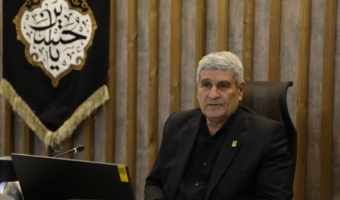
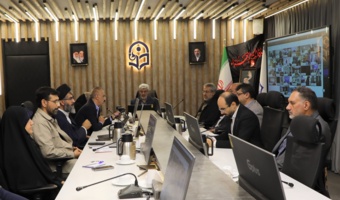
According to the Public Relations Office of Farhangian University, Mehrzad Hamidi, Acting President of Farhangian University, presented the university’s policies and programs for 2026–2031 at the second gathering of provincial presidents of Farhangian University, held on July 19, 2026, at the Shahid Bahonar Cultural Complex in Tehran. He welcomed provincial presidents from across the country and outlined the university’s strategic priorities for the coming years.
Paying tribute to the spirit of the late Imam Khomeini, the martyred Leader of the Islamic Revolution and all martyrs of the country, Hamidi stated that the martyred Leader, guided by the vision of a strong Iran and academic leadership, had elevated the country to new heights of scientific advancement and national strength during 37 years of visionary leadership.
He described the personality and conduct of the martyred Leader as a tangible embodiment of a “virtuous life,” explaining that a virtuous life entails balanced, elevated and comprehensive personal development. He noted that the martyred Leader of the Islamic Revolution, like Imam Hussein, was martyred alongside his family and had no concern other than serving the Iranian nation and the Islamic Ummah, reaching high levels of spirituality.
The Acting President of Farhangian University identified the university’s mission as articulating the intellectual framework of the martyred Leader of the Islamic Revolution and developing role models for student teachers and school students so that they can advance toward higher levels of spirituality and public service.
Referring to Iran’s remarkable scientific growth in recent decades and efforts by its adversaries to halt this progress, Hamidi stated that Iran has independently advanced along the frontiers of knowledge while preserving its independence. He said this progress has led to concerns among global powers and has been accompanied by continued threats and sanctions.
Emphasizing the important role of Farhangian University under the country’s current circumstances, Hamidi stated that the university is the focal point of the national education system. He said scientific advancement, progress and excellence begin with Farhangian University, adding that future scientific breakthroughs depend on preparing competent, effective, God-conscious and faithful teachers. Any failure in this university, he warned, would cause irreparable damage to Iran’s scientific and civilizational future.
Hamidi stated that his policies for Farhangian University are based on the country’s upstream policy documents while making use of opportunities within higher education and preserving the university’s school-oriented identity. He emphasized the need to maintain close ties with the Ministry of Education and make optimal use of higher education capacities as a strategic approach, while preventing Farhangian University from losing its distinctive mission and identity.
The Acting President then outlined the main components of his transformational agenda. He identified the first policy as planning-oriented management, with an emphasis on problem solving, identifying, and improving the university’s strategic processes.
He described quality orientation, quality assurance and the enhancement of university standards based on the policies of the martyred Leader and the Fundamental Transformation Document of Education as the second policy.
Hamidi identified faculty-centered management as his third policy at Farhangian University, stating: “We must return to the faculties.” Authority should be restored to faculties and provinces, and neither the central administration nor provincial structures should impede the educational and developmental activities of faculties.
He identified participation and the use of the capacities of faculty members and student teachers, along with attracting participation from within and outside the organization, as another key policy. He stated that a fully effective provincial manager is one who can mobilize the participation of the province and the organization’s internal capacities.
The Acting President identified strengthening ties with the Ministry of Education as another strategic priority. He emphasized the need to re-engineer policies and redefine the principles governing teacher education curricula, strengthen professional teacher preparation within the education system, and introduce flexibility into teacher education programs in response to scientific developments and the evolving needs of the formal education system.
He identified establishing Farhangian University as an academic authority in education and teacher training as another major policy. Hamidi stated that, in light of the Second Step of the Islamic Revolution Statement, Farhangian University should become a credible global reference for teacher education and a hub for presenting the scientific findings of education and teacher-training specialists.
Hamidi also identified youth empowerment and building future institutional capacity through young talent as key components of his work program.
He further described decentralization based on delegation of authority and supervision as a central policy for preparing competent and effective human resources.
Referring to the fact that fundamental transformation in any university begins at the faculty level, Hamidi stated that national programs should increasingly be transferred to faculties. Programs that originate from faculties, he said, will also produce effective results at the national level.
He added that this approach should be regarded as a transformative shift, emphasizing that institutional excellence and genuine educational development cannot be achieved through any other path.
Hamidi stressed that residential university life is one of the distinguishing features of Farhangian University compared with other universities. He said the university must pay particular attention to the large student population living in dormitories, noting that education and personal development often take place more effectively in informal, non-classroom settings and during students’ leisure time, including their life in university residences.
He added that the target population for residential university life should encompass all student teachers at Farhangian University.
Referring to the oversized structure of the university’s central administration, the Acting President stated that a central administration responsible for policymaking, supervision and strategic guidance does not require an unnecessarily large structure. The central administration should consist of thinkers and experts who create initiatives and networks and should never become an executive arm. Becoming entangled in operational implementation, he noted, can prevent the central administration from fulfilling its policymaking role.
Hamidi identified academic leadership, the development and enhancement of academic publications, the expansion of standardized educational facilities and the improvement of educational quality as key factors in positioning Farhangian University at the forefront of teacher education. He added that conferences and seminars, research projects and book publishing should primarily take place at the faculty level.
He also emphasized the need to empower young faculty members, expand cultural and educational programs, promote volunteer activities and establish community-oriented service groups led by student teachers.
Hamidi stressed the importance of developing specialized provincial hubs, noting that such specialization would strengthen the capacities and capabilities of provincial branches.
The Acting President of Farhangian University concluded by stating that the university’s mission is not only to prepare good teachers for the Ministry of Education, but also to educate good citizens who can contribute positively to society.


Your Comment :