
Three-Stage Assessment of Student Teachers: From Admission to Teacher Competency Certification
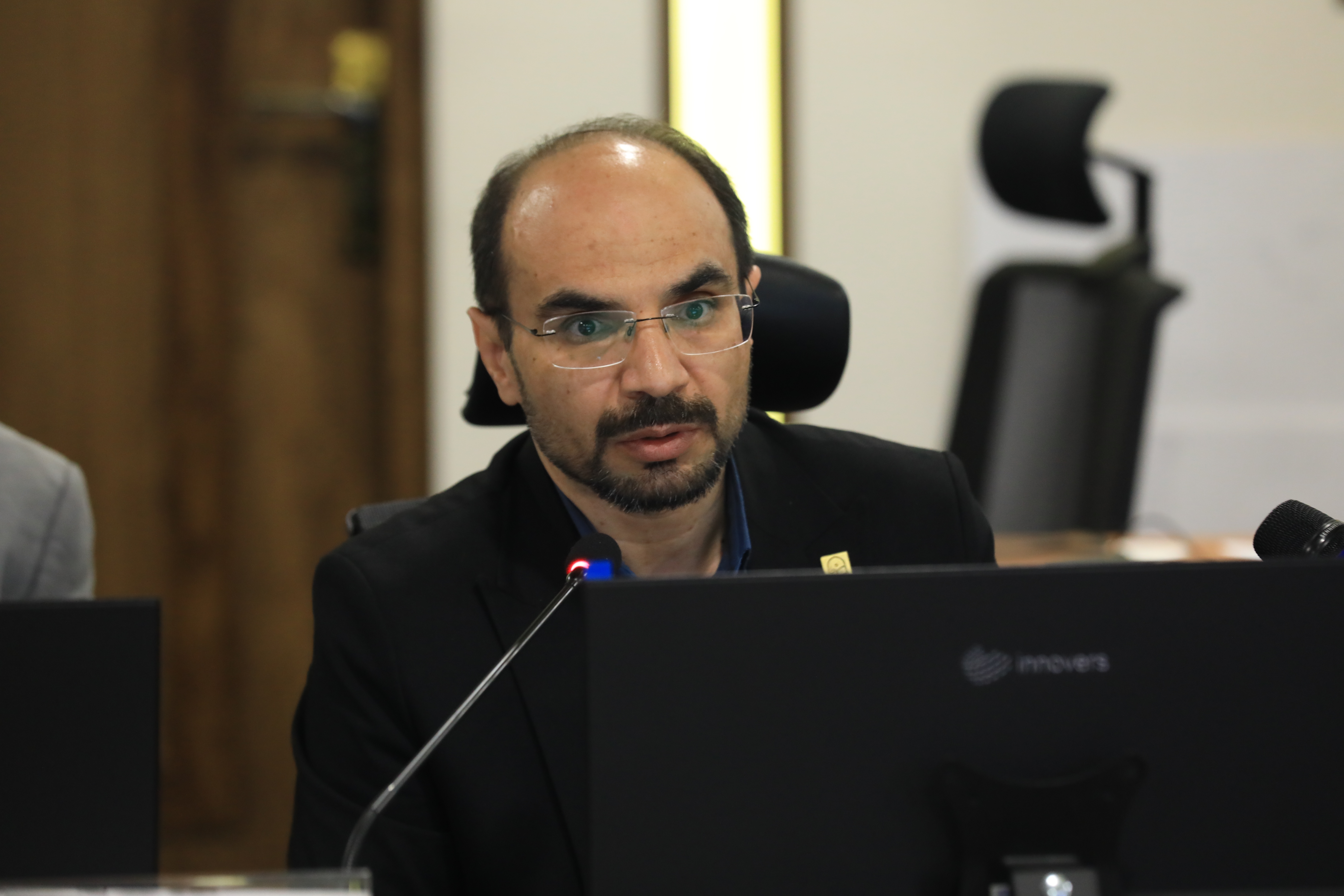
Head of the Center for Monitoring, Evaluation and Quality Assurance at Farhangian University Announces New Assessment System
Sajed Yaghoubnejad, Head of the Center for Monitoring, Evaluation and Quality Assurance at Farhangian University, has outlined a new model for assessing applicants seeking admission to the university and announced the implementation of a continuous monitoring system for student teachers from the beginning of their studies through graduation.
According to the Public Relations Office of Farhangian University, Sajed Yaghoubnejad made the remarks during the second gathering of provincial heads of Farhangian University, held on July 19, 2026, at the Shahid Bahonar Cultural Complex in Tehran.
He said the university has developed an integrated and clearly defined monitoring and evaluation system covering all major components of the institution, including student teachers, faculty members and provincial university heads across various areas. The system is designed to systematically assess the university’s different components in line with its quality assurance objectives.
Yaghoubnejad also announced the development and unveiling of an analytical management dashboard, explaining that the platform enables university managers at both provincial and national levels to closely monitor critical processes in the educational, research, financial and infrastructure sectors.
He identified three key stages in the quality monitoring of student teachers. The first stage involves a new method of assessing teaching competencies at the time of admission. In addition, pursuant to Paragraph (b) of Article 88 of the Seventh Development Plan, student teachers will undergo annual assessments during their studies. Failure to meet the required minimum quality standards will result in termination of the student’s employment relationship with the university.
The third stage involves the issuance of a Teacher Competency Certificate, the relevant approval for which is currently being pursued through the Supreme Council of the Cultural Revolution. This certification is intended to provide an assessment of student teachers upon completion of their studies.
The Head of the Center for Monitoring, Evaluation and Quality Assurance at Farhangian University also referred to the assessment of previous methods, including panel interviews and assessment centers. He said that by retaining the strengths of earlier models while eliminating their limitations, the university has developed a new model known as situation-based assessment groups.
He explained that under the new model, provincial headquarters will be established under the chairmanship of the provincial Director General of Education and the vice-chairmanship of the provincial head of Farhangian University. Assessment centers will also be established, with at least two centers for female and male applicants in each province.
According to Yaghoubnejad, each provincial headquarters will have two key components: assessment centers and assessment groups.
He added that each assessment group will consist of three permanent members: a licensed psychologist, an experienced teacher or educator, and a faculty member specializing in educational sciences or psychology.
The Head of the Center for Monitoring, Evaluation and Quality Assurance at Farhangian University further announced that 260 different interview packages have been developed, all with an equivalent level of difficulty, to ensure fairness in assessment and prevent bias.
He emphasized that the questions have been designed in a standardized manner for use nationwide while maintaining strict confidentiality. All interviews will also be audio-recorded to facilitate precise monitoring and oversight of the assessment process.



Your Comment :